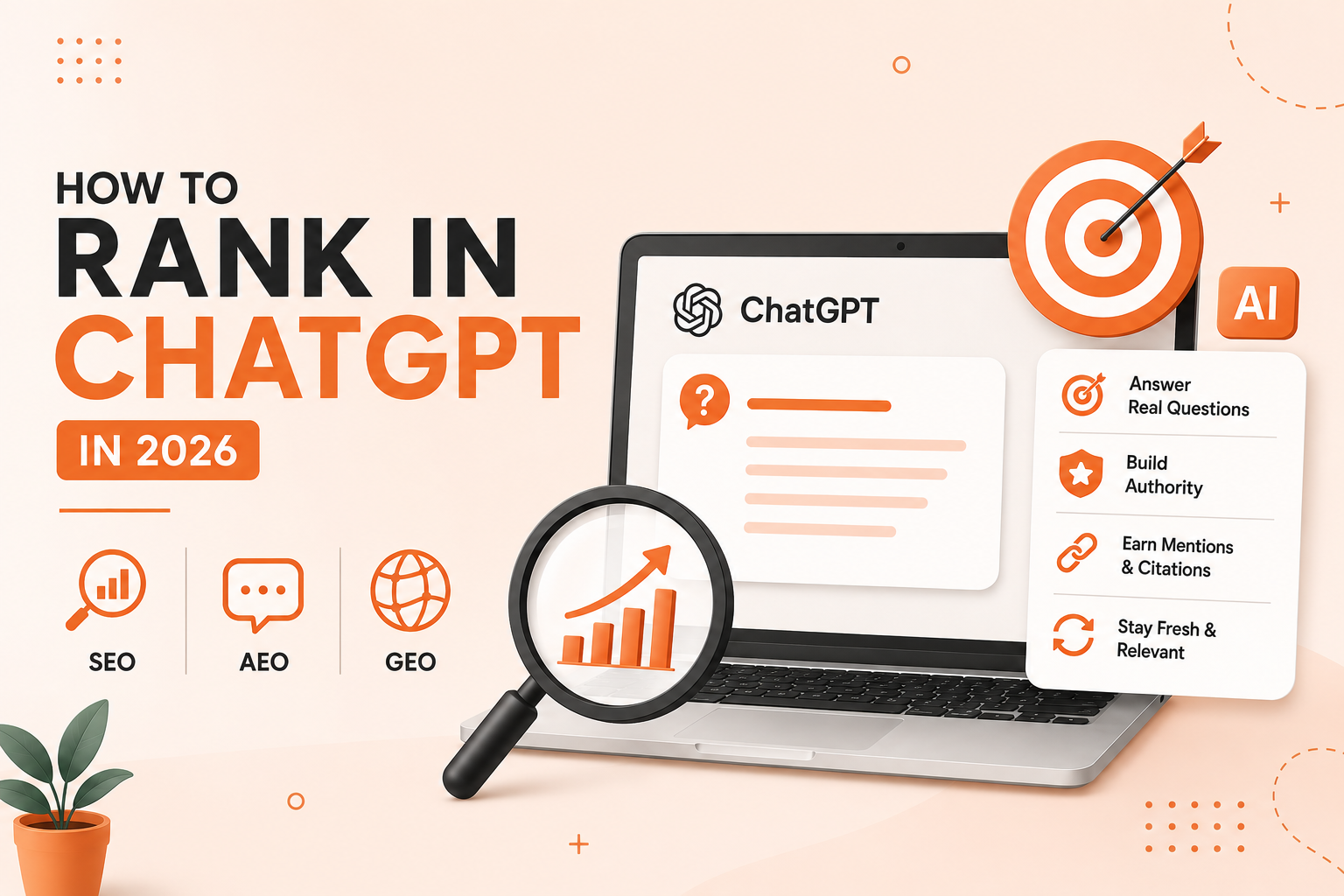



Search is no longer a list of links.
It’s an answer layer powered by AI.
Google’s AI Overviews, People Also Ask (PAA), and large language models (LLMs) like ChatGPT and Perplexity are redefining how information is discovered, summarized, and trusted. Ranking #1 is no longer the finish line — being cited as the answer is.
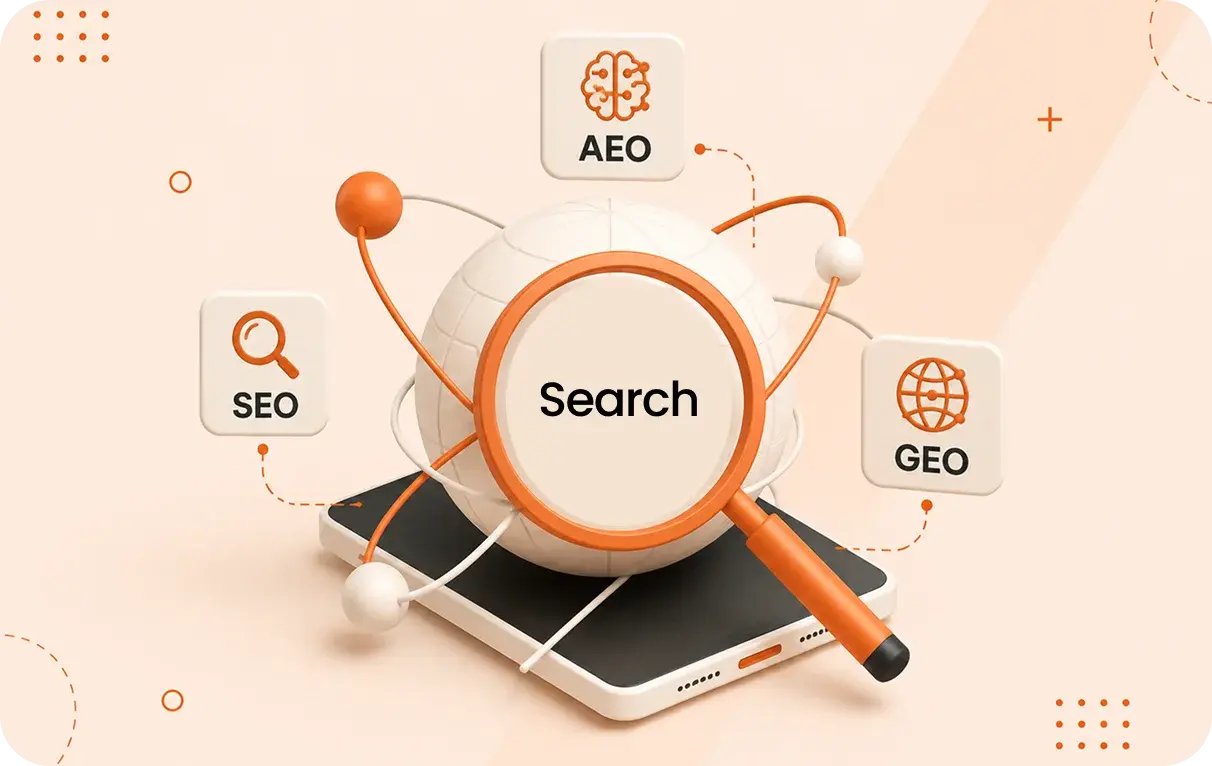
This is where the evolution from SEO → AEO → GEO begins.
Phase 1: Traditional SEO — The Foundation (Still Critical)
SEO remains the base layer of visibility. Without strong SEO fundamentals, AEO and GEO don’t work.
Core SEO Functions That Still Matter
- Crawlability & indexation: Ensuring search engines can discover and index all your important pages.
- Site speed & Core Web Vitals: Optimizing load times for better user experience and ranking potential.
- Keyword research & intent mapping: Identifying the right keywords and aligning them with user intent.
- Internal linking & site architecture: Structuring your website for easy navigation and better crawlability.
- Content quality & topical relevance: Creating high-quality, informative, and relevant content that meets user needs.
But SEO alone is no longer enough.
Today, many page-one rankings receive fewer clicks because AI answers appear above them.
Phase 2: Answer Engine Optimization (AEO) — Becoming the Answer
What Is AEO?
Answer Engine Optimization (AEO) is the practice of structuring content so search engines and AI systems can extract, summarize, and present direct answers to user questions.
Why AEO Exists
- AI Overviews answer questions instantly
- PAA expands endlessly based on user intent
- LLMs prefer concise, structured, authoritative sources
If your content can’t be easily summarized, it won’t be selected.
How AI Overviews & PAA Actually Work
AI Overviews
Google synthesizes answers from:
- High-authority pages: Google prefers authoritative sources to provide trusted information.
- Clear answer blocks: Structured data like concise paragraphs or bullet points make it easier for AI to extract relevant answers.
- Structured content (FAQs, lists, tables): Well-organized content helps AI pinpoint the answer more effectively.
- Strong E-E-A-T signals: Expertise, experience, authority, and trustworthiness are key to ranking in AI overviews.
It does not show 10 options — it selects the most confident answers.
People Also Ask (PAA)
PAA is a real-time question expansion engine.
Optimizing for PAA:
- Increases visibility above organic results: Appearing in PAA can drive traffic directly from the search results, bypassing traditional organic listings.
- Feeds AI Overviews: Content optimized for PAA can be selected for AI Overviews, amplifying its reach.
- Builds conversational authority: Engaging with questions in a natural, conversational style enhances your content’s authority on the topic, improving SEO rankings.
PAA is often the gateway to AI inclusion.
Core AEO Optimization Principles
1. Question-First Content
Structure pages around:
- What is…
- How does…
- Why is…
- When should…
- What are the benefits of…
2. Answer Blocks Near the Top
Place concise 40–60 word answers immediately after headings.
3. Structured Formatting
- Bullet lists
- Comparison tables
- Step-by-step sections
- FAQs with schema
4. Schema Is Non-Negotiable
Use:
- FAQPage
- HowTo
- Article
- Organization
- Product
Schema improves eligibility, not rankings — but eligibility is everything in AI search.
Phase 3: Generative Engine Optimization (GEO) — Training AI to Trust You
AEO helps you become the answer.
GEO ensures your brand becomes the trusted source behind the answer.
What Is GEO?
Generative Engine Optimization (GEO) focuses on optimizing content and brand presence so LLMs reference, cite, and learn from your content.
This includes:
- ChatGPT
- Perplexity
- Gemini
- Bing Copilot
How LLMs Choose Sources?
LLMs prefer content that is:
- Evergreen and factual: Timeless content based on facts tends to rank better in AI models.
- Context-rich (not thin): In-depth, detailed content that provides real value and context.
- Clearly attributed to a brand: Content that is linked to a specific, recognized brand is seen as more credible.
- Consistent across platforms: Alignment in messaging and branding across multiple platforms improves trust.
- Referenced externally: Citations and links from other credible sources validate the authority of your content.
They value knowledge depth over keyword density.
GEO Optimization Strategies
1. Build Topical Authority (Not Just Pages)
Create pillar + cluster ecosystems around core topics. AI models favor brands that cover:
- Definitions: Establish foundational knowledge to build authority.
- Use cases: Practical examples demonstrating your expertise.
- Pros & cons: A balanced view creates trust.
- Best practices: Offering actionable advice shows expertise.
- Risks & compliance: Addressing industry risks shows credibility.
- FAQs: Answering frequent questions builds trust and authority.
2. Write for Understanding, Not Just Ranking
Avoid vague statements. Instead:
- Explain concepts fully: Go beyond the basics to provide in-depth explanations.
- Define industry terms: Help readers understand technical jargon.
- Provide context and reasoning: Giving background enhances content quality.
- Use simple, natural language: Prioritize clarity over complexity, making content approachable.
3. Strengthen Brand & Trust Signals
- Clear organization pages: Well-structured pages help AI understand your brand better.
- Author bios with expertise: Show the credibility behind your content.
- Consistent brand mentions: Regular references to your brand across content increase recognition.
- Case studies and proof points: Real-world examples of success build trust.
- External citations and PR mentions: Being referenced by others reinforces your authority.
LLMs trust brands, not anonymous pages.
SEO → AEO → GEO: How They Work Together
|
Layer |
Purpose |
Outcome |
|
SEO |
Discoverability |
Pages get indexed |
|
AEO |
Answer visibility |
Content appears in AI answers |
|
GEO |
Brand authority |
Brand gets cited & remembered |
Skipping any layer weakens the entire strategy.
How to Measure Success in the AI Search Era
Traditional metrics alone aren’t enough.
Track:
- PAA ownership: Monitor how often your content appears in People Also Ask (PAA) sections, which boosts visibility above organic results.
- Featured snippet wins: Track the frequency of your content being selected as a featured snippet, positioning your brand as the answer.
- AI Overview visibility: Measure how often your content is included in AI-powered overviews, gaining visibility above regular search results.
- Impressions vs CTR shifts: Analyze the change in impressions and click-through rates (CTR) to understand user engagement with AI-driven content.
- Long-tail question growth: Monitor the growth of long-tail search queries targeting specific questions, reflecting the effectiveness of your content in AI-driven responses.
- Brand mentions in AI tools: Track how frequently your brand is mentioned or referenced by AI tools (like ChatGPT, Bing Copilot, etc.), reflecting growing authority and trust.
In AI search, visibility ≠ clicks, but visibility still drives trust, recall, and conversions.
The Strategic Shift Marketers Must Make
Old mindset:
“How do we rank higher?”
New mindset:
“How do we become the most trusted answer?”
Brands that adapt will:
- Win AI-driven visibility
- Maintain authority even as clicks drop
- Influence buying decisions earlier
- Future-proof organic growth
Final Thought
SEO got you found.
AEO gets you answered.
GEO gets you remembered.
The future of search belongs to brands that teach AI what the truth is.
SEO gets your brand discovered, AEO ensures your content is selected as the answer, and GEO builds the authority needed to be trusted and remembered by AI systems. At Straight Growth, we help brands move beyond rankings to become credible sources that AI platforms rely on—by combining strong SEO foundations with answer-driven content and long-term authority building. In a search landscape shaped by AI, the brands that win are the ones that consistently teach search engines what the truth is.