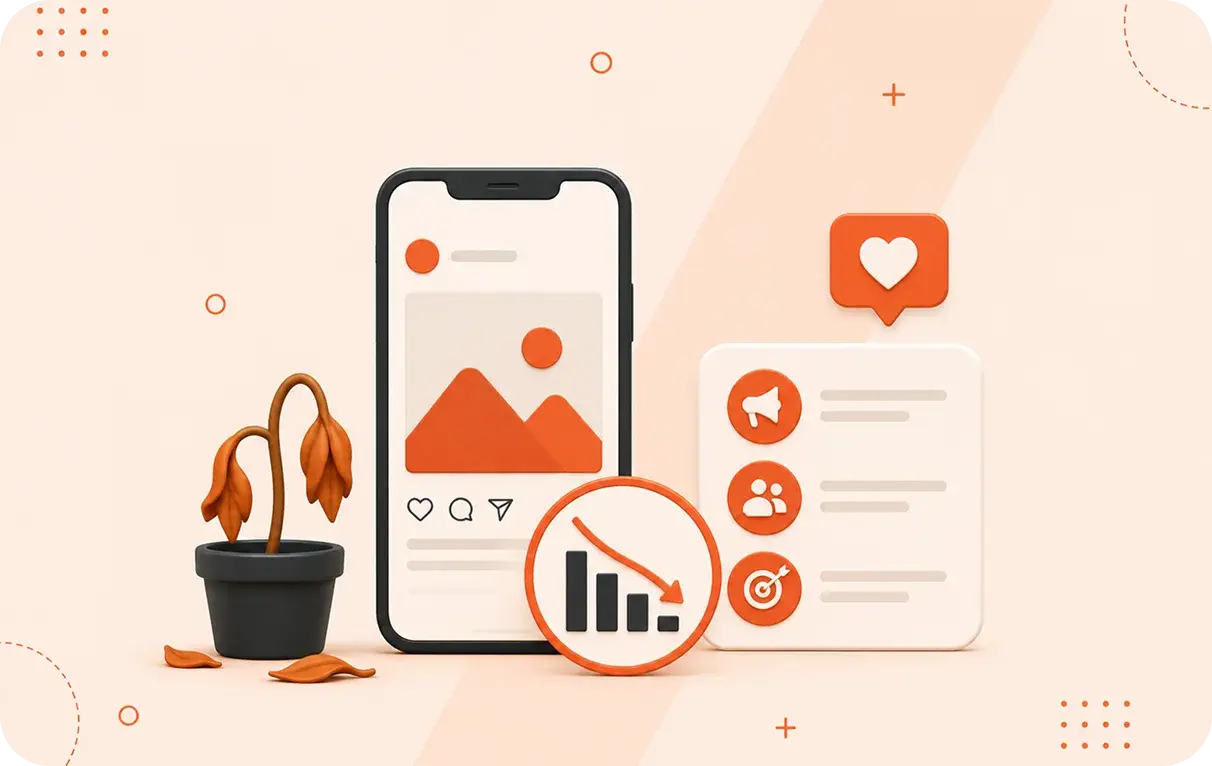


Let’s address the question directly: Is Organic Reach Dead in 2026?
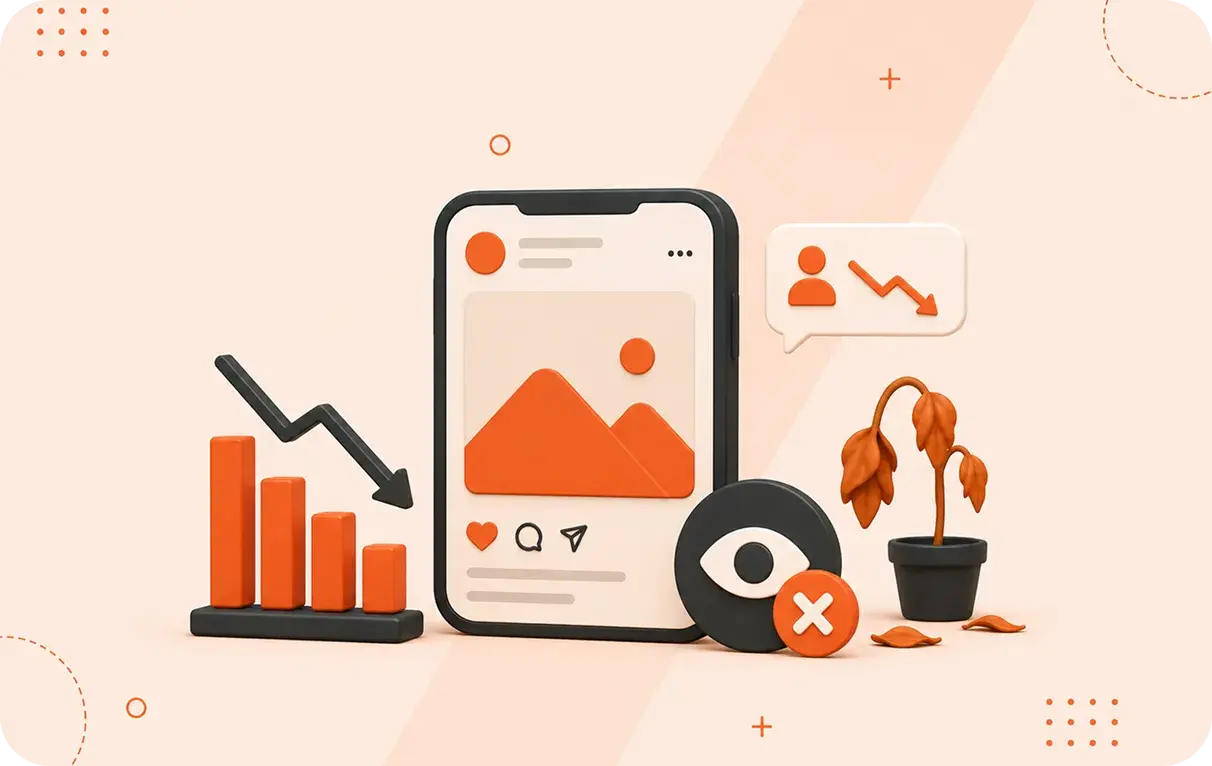
No, organic reach isn’t completely dead in 2026. It’s just significantly harder to earn at scale. Most platforms now prioritise user experience and engagement signals, while paid placements keep expanding—so organic alone is rarely enough for serious business growth.
The winners in organic reach 2026 are using a smarter approach: high-quality value-first content + niche targeting + community engagement + SEO/AI optimization + selective paid boosts and creator collaborations.
In other words, not “either organic or paid” — but hybrid marketing.
Why “Organic Reach Is Dead” sounds familiar (and why it’s usually the wrong conclusion)
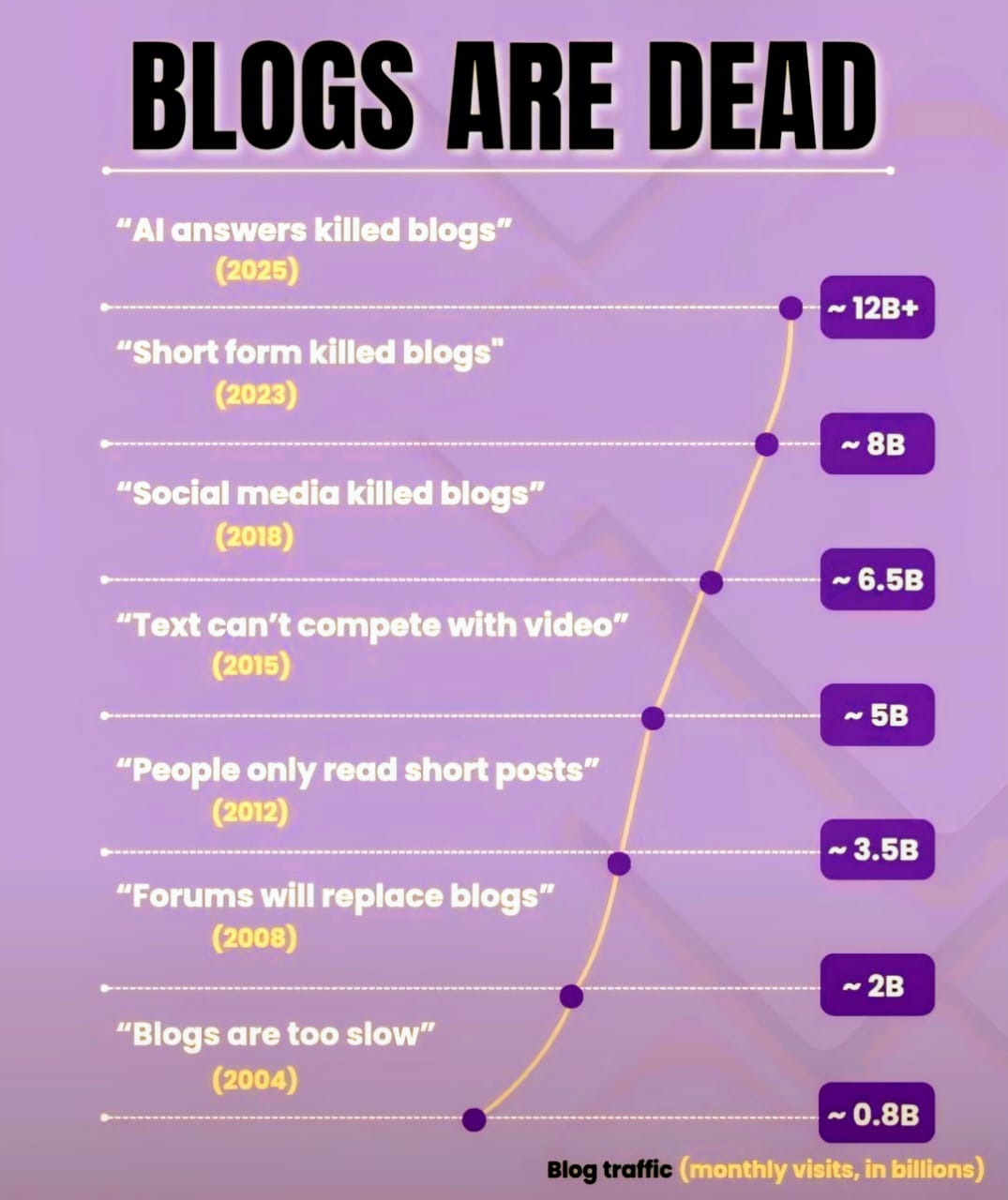 This Stats highlights how people have repeatedly said “blogs are dead” because of the next big thing—forums, short posts, video, social media, and now AI answers. Yet Semrush’s Head of Marketing, Natalia Zhukova, argues blog traffic is at an all-time high and that “lazy content” died—not blogging.
That’s the exact pattern happening with organic reach:
When someone says, “Organic is dead,” it’s often code for:
- “My content looks like everyone else’s.”
- “I’m posting, but I don’t have a distribution engine.”
- “I’m trying to reach everyone, so I’m resonating with no one.”
Every channel still works. What changes is the skill and strategy required—and in 2026, that bar is higher than ever.
Don’t Rely on Social Alone — SEO Is the Organic Reach Multiplier in 2026
Organic reach in 2026 isn’t only about feeds anymore. Social posts spike fast, but SEO compounds—a strong blog or guide can keep bringing traffic long after the post disappears from timelines. That’s why the smartest strategy is search-led + social-amplified: publish one high-value piece (blog/landing page) that answers real search questions like “Is organic reach dead in 2026?” and “how to increase organic reach”, then repurpose it into short videos, carousels, and LinkedIn posts that drive clicks back to the page.
But, don't forget to back this with a hybrid marketing strategy to ensure all channels—organic, paid, and creator collaborations—are working together for maximum impact.
What’s happening to organic reach in 2026 (the real reasons)
1) Platforms are mature, crowded, and heavily filtered
Meta, YouTube, TikTok—these are not “growing” platforms anymore. They’re attention marketplaces with billions of posts competing for limited feed space. That means ranking systems filter aggressively, pushing content that’s most likely to keep users engaged.
And yes, the content flood is real—including low-quality AI-generated content that increases competition and forces platforms to be even stricter about what gets shown.
2) Organic reach benchmarks are genuinely low (often single digits)
Here’s the part that stings: even “good” brands often see reach in the low single digits.
A Socialinsider report cites average reach rates in 2025 at about 3.50% for Instagram and 1.65% for Facebook.
Neil Patel has also publicly described organic social reach shrinking to low single digits, encouraging brands to combine organic with paid and other channels.
3) Algorithms now reward “viewer satisfaction,” not just clicks
This matters a lot for 2026.
- YouTube explicitly considers satisfaction signals (including surveys) alongside behaviour like watch time.
- Meta describes feed ranking as prediction-driven using many signals to estimate what people will find valuable.
So “posting more” doesn’t fix reach. Posting what holds attention and earns response does.
So… what should you do instead? (The 2026 organic reach playbook)
Think of organic in 2026 as brand equity + trust + demand capture, not your only distribution lever.
1) Embrace hybrid marketing (organic + paid = the new normal)
Organic builds credibility. Paid creates certainty.
The best-performing strategy right now is:
- Use organic to build trust, demonstrate expertise, and create “proof assets”
- Use paid to guarantee reach, retarget warm audiences, and scale what already works
This isn’t “giving up.” It’s adapting to how platforms function today. A hybrid marketing approach lets you take advantage of both organic and paid efforts, making sure you aren’t putting all your eggs in one basket.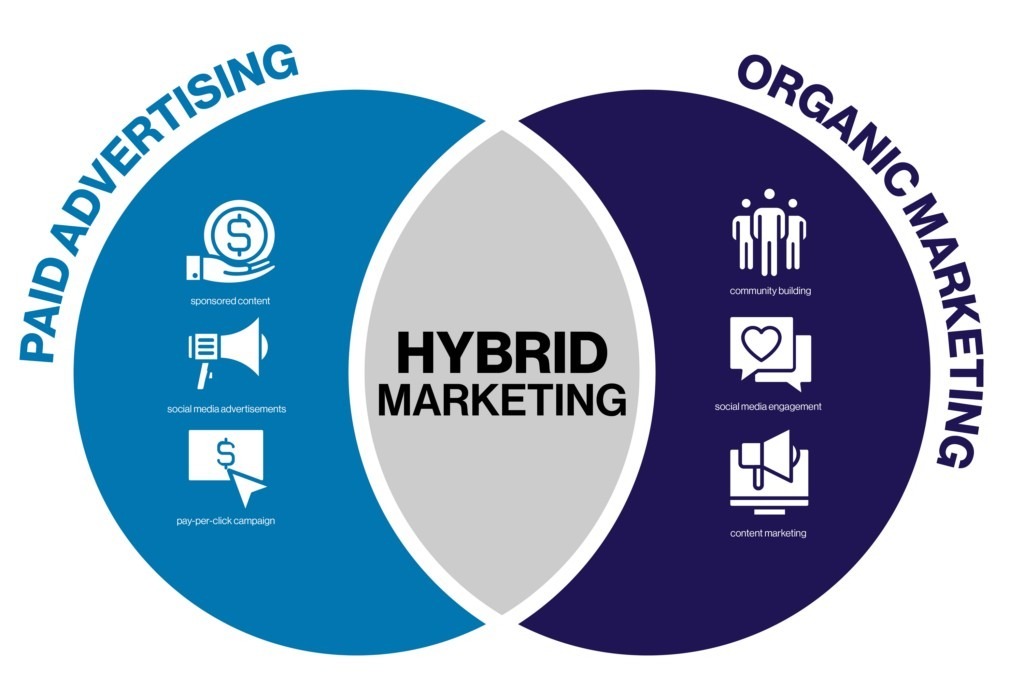
Practical move:
Boost only what’s already performing (posts with saves, comments, high watch time). Don’t boost everything—boost the winners.
2) Stop targeting everyone. Win a niche community instead.
Trying to be broad is the fastest way to disappear.
In 2026, niche beats noise because:
- niche content gets higher relevance signals
- community engagement is stronger and faster
- word-of-mouth travels further inside tight networks
Ask this before every post:
“Who is this specifically for—and what will they do after consuming it?”
If your answer is vague, your reach will be vague too. This is why the hybrid marketing strategy also needs to focus on audience segmentation.
3) Optimize for AI discovery and SEO inside social
In 2026, your content isn’t only being discovered by humans scrolling. It’s also being “understood” by systems. Social platforms increasingly behave like search engines.
To win in organic reach 2026, optimize content for discoverability:
- Write captions with search-friendly phrasing (how people actually ask questions)
- Use keywords naturally in hooks and headings
- Add clear context: who it’s for, what problem it solves
- Use strong thumbnails and readable on-screen text
- Add subtitles/transcripts for retention and accessibility
Even Social platforms behave more like search engines now—especially with how users discover content through “suggested” feeds and in-app search.
4) Collaborate with creators (instant trust + borrowed audiences)
Influencer marketing isn’t only for B2C anymore.
For B2B and services:
- partner with micro-creators in your niche
- co-host a live session or webinar
- do a “swap” post: their audience meets you, your audience meets them
Creators already have attention. Your job is to bring expertise and usefulness. This fits perfectly within the framework of hybrid marketing, helping you get noticed by a relevant audience faster.
5) Diversify content distribution beyond social
This is the part most brands skip—and then they blame “organic reach.”
Social attention is rented. Build owned assets too:
- blog (long-term search + trust compounding)
- email list (direct distribution)
- podcast (depth + loyalty)
- community (repeat engagement)
If your strategy depends entirely on social feeds, you’re vulnerable.
If you combine owned channels with hybrid marketing, you’re resilient.
Final takeaway
Organic reach isn’t dead in 2026. Easy organic reach is dead.
If you treat organic as “free traffic,” it will feel disappointing.
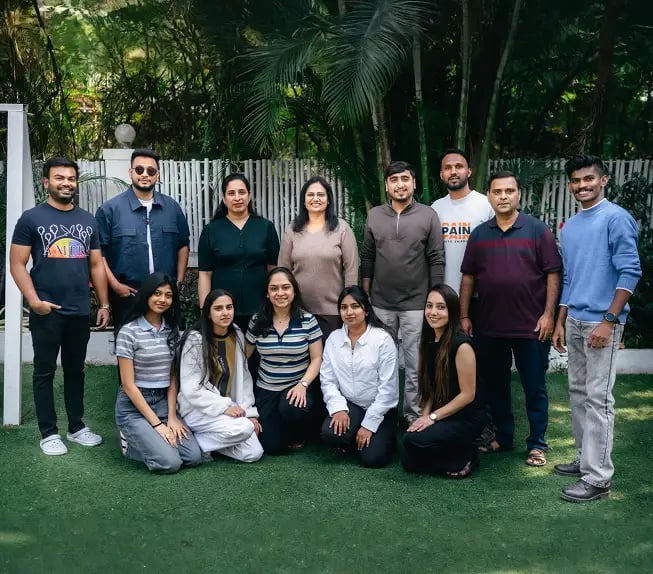
If you treat it as trust-building content + community + distribution, it becomes one of the strongest long-term growth assets you can build—especially when combined with paid, collaborations, and owned channels. At Straight Growth, we focus on developing hybrid marketing strategies that integrate organic and paid approaches, helping you build lasting relationships and effectively expand your reach across various channels. Let us guide you in creating a balanced strategy that drives sustainable growth.