


HubSpot’s Spring 2026 Release brings a clear shift in how the platform uses AI.
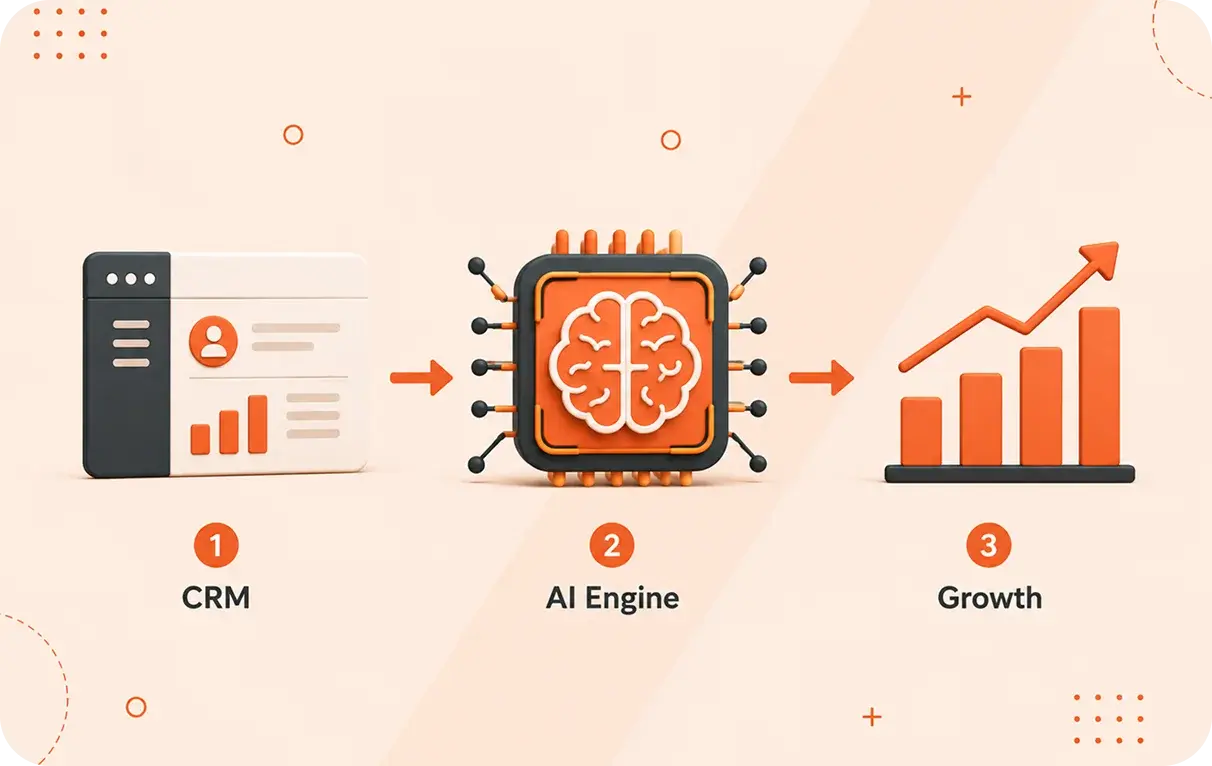
Instead of adding AI as a separate feature, HubSpot is connecting it with CRM data, customer activity, sales conversations and business processes. The aim is to give marketing, sales and service teams useful recommendations based on real customer context—not generic AI-generated suggestions.
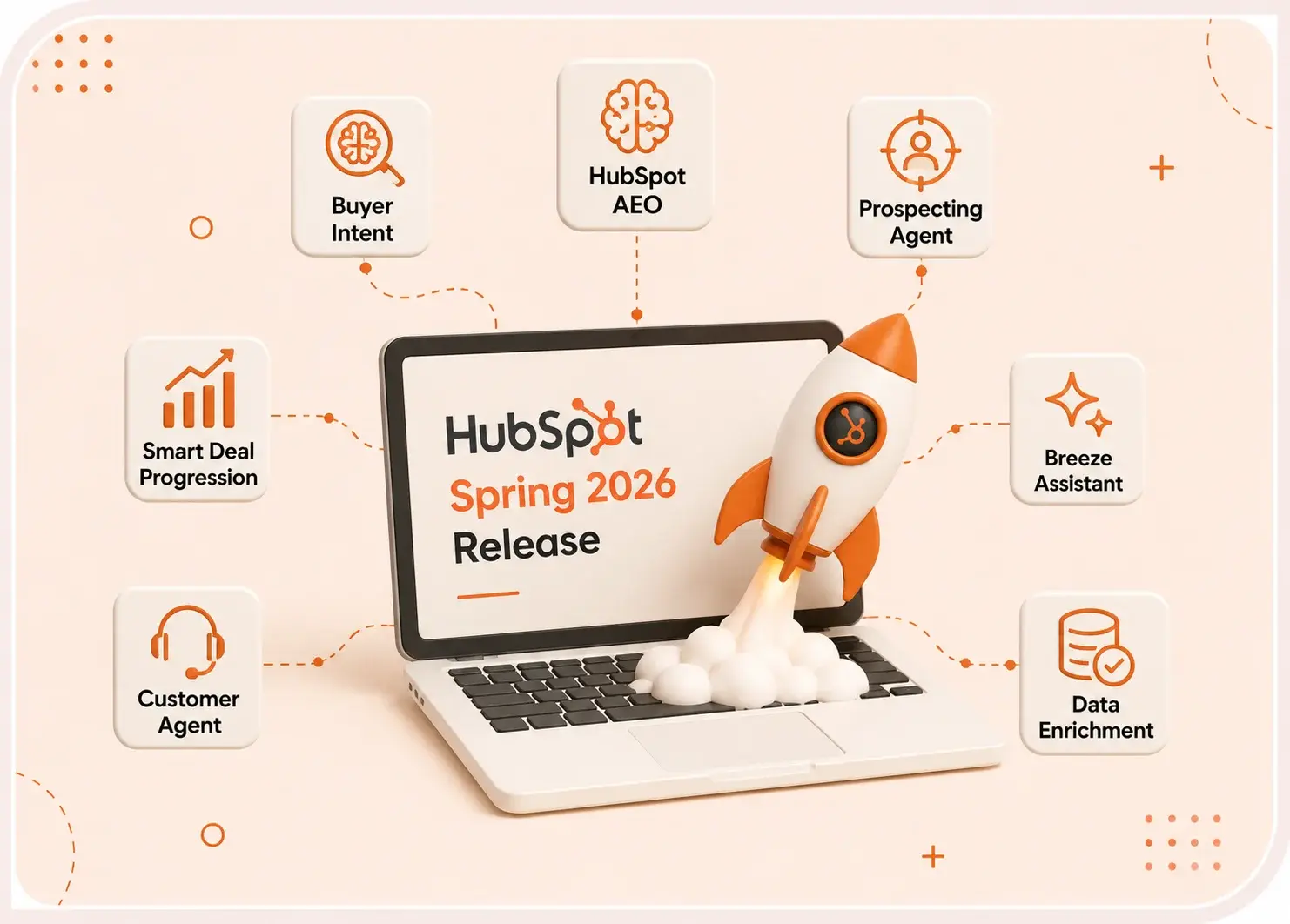
The release includes more than 100 updates, with HubSpot AEO, Buyer Intent, Prospecting Agent, Smart Deal Progression and Customer Agent among the most important announcements.
Here is what these updates mean and how businesses can use them.
1. HubSpot AEO Helps Brands Appear in AI Search
Traditional SEO focuses on helping pages rank in search engines such as Google. Answer Engine Optimization, or AEO, focuses on helping brands appear in answers generated by tools such as ChatGPT, Gemini and Perplexity.
HubSpot AEO allows marketers to track how often their brand appears in AI-generated answers, compare visibility against competitors and understand which websites or content sources are influencing those answers.
It can also provide recommendations to improve brand visibility. For Marketing Hub Professional and Enterprise customers, HubSpot can use CRM and customer data to suggest the questions that real buyers may be asking AI tools.
Why it matters
Buyers are no longer relying only on search engine results. They are increasingly using AI tools to research products, compare providers and shortlist potential vendors.
AEO gives marketing teams a way to measure this new discovery channel instead of guessing whether their brand is being mentioned.
However, AEO should not replace SEO. Businesses still need helpful website content, strong topic coverage and clear brand positioning. AEO simply adds another layer to the overall content and search strategy.
2. Buyer Intent Provides a Clearer View of Active Prospects
Buyer Intent helps businesses identify companies that may already be interested in their products or services.
It brings together different types of buying signals, including:
- Visits to important website pages
- Research activity across relevant topics
- Funding announcements
- Leadership or job changes
- Product launches and other company news
- Engagement from known contacts
These signals are displayed inside HubSpot, allowing sales and marketing teams to see which companies may be moving closer to a purchase. HubSpot can also add a company’s previous 30 days of signal activity when tracking begins, giving teams useful context from the start.
How teams can use it
A company repeatedly visiting pricing and service pages could be added to a high-intent segment. HubSpot could then notify the relevant sales representative, create a task or enrol the company in a suitable workflow.
This can help sales teams prioritise active opportunities rather than spending the same amount of time on every account.
Buyer Intent will still need proper setup. Teams must define their target market, important website pages and meaningful signals. Without clear criteria, the tool may create more alerts without necessarily creating better opportunities.
3. Prospecting Agent Supports the Full Prospecting Process
HubSpot’s Prospecting Agent has been expanded beyond basic account research and email drafting.
It can now monitor companies for buying signals such as funding, recruitment activity and technology adoption. It can then identify suitable contacts, help map the buying committee and prepare personalised outreach using CRM history and current account activity.
Sales representatives can review and approve the messages before they are sent.
Why this is useful
Sales prospecting usually involves several repetitive steps:
- Finding suitable accounts
- Researching the company
- Identifying the right contacts
- Reviewing previous engagement
- Writing a relevant message
Prospecting Agent can reduce the manual work involved in these steps.
The biggest advantage is that it works with information already stored in HubSpot. For example, its outreach can consider recent website activity, previous emails and known buying signals instead of relying only on general information found online.
It should still support sales representatives rather than replace them. Reps need to review the context, confirm that the contact is relevant and make sure the final message sounds natural.
4. Smart Deal Progression Reduces Post-Meeting Admin
A common CRM problem is that sales representatives complete a meeting but do not immediately update the deal.
Important details remain inside meeting notes or recordings, while the deal stage, close date and next steps become outdated.
Smart Deal Progression is designed to address this problem. After a sales call, it reviews the meeting transcript together with the deal’s history. It can then:
- Recommend CRM property updates
- Suggest changes to the deal stage or close date
- Identify action items
- Create follow-up suggestions
- Draft a follow-up email
Unlike a standard meeting summary, it also considers previous emails, notes, deal activity and the organisation’s pipeline structure.
This could help businesses maintain cleaner pipelines and reduce the time sales representatives spend updating records.
Teams should still review the suggested changes before applying them, particularly for important fields used in revenue forecasting and reporting.
5. Breeze Assistant Now Has More Business Context
Breeze Assistant has also been updated to provide more role-specific support.
For marketing teams, it can help define ideal customer profiles, prepare brand guidance and create campaign briefs using HubSpot’s Loop Marketing framework. Its suggestions can be based on existing customer data and campaign activity rather than generic templates.
The assistant can also adjust its guidance based on the user’s role and the area of HubSpot they are working in.
This makes Breeze more useful for everyday work. A marketer may receive campaign recommendations, while a sales representative may receive information related to an account or deal.
The quality of these suggestions will still depend heavily on the quality of the information stored in HubSpot.
6. Customer Agent Now Supports Email
HubSpot’s Customer Agent can now work with customer support emails in addition to other supported channels.
It can respond to common questions using connected knowledge sources and customer information stored in HubSpot. Teams can control its tone, active hours, supported ticket types and the percentage of conversations it handles.
Responses can also be reviewed by a human before they are sent. When a support representative takes over, the previous conversation and customer history remain available inside Help Desk.
This allows businesses to begin with a small group of straightforward enquiries before using the agent more widely.
The goal is not to automate every customer conversation. It is to handle routine questions faster while allowing support teams to focus on cases that need experience, judgement or empathy.
7. Data Enrichment Makes CRM Records More Useful
Data Enrichment supports many of the other updates in the HubSpot Spring 2026 Release.
It can help complete and update company and contact information, reducing the time teams spend manually researching missing details. Cleaner records can improve segmentation, lead scoring, workflow routing and personalised outreach.
However, businesses should not treat enrichment as a replacement for data management. Duplicate records, inconsistent property values and outdated workflows still need to be reviewed.
AI works best when the CRM structure underneath it is reliable.
What Should HubSpot Users Do Next?
Businesses do not need to activate every new feature immediately.
A more practical approach is to begin with one use case that solves an existing problem.
For example:
- Use Buyer Intent if sales teams struggle to prioritise accounts.
- Explore AEO if AI search visibility is becoming an important marketing goal.
- Test Prospecting Agent if account research takes too much time.
- Use Smart Deal Progression if sales representatives regularly miss CRM updates.
- Start Customer Agent with a limited group of repetitive support questions.
Before rolling out these tools, review the CRM data, permissions, pipelines, tracking setup and existing automation. This will give HubSpot enough context to produce more reliable results.
Final Thoughts
The HubSpot Spring 2026 Release is not simply a collection of new AI tools. It shows how HubSpot is moving towards a CRM that can identify signals, recommend actions and support teams throughout the customer journey.
AEO helps marketers understand visibility in AI search. Buyer Intent highlights companies showing signs of interest. Prospecting Agent supports account research and outreach. Smart Deal Progression reduces sales administration, while Customer Agent helps service teams manage routine enquiries.
The real value will depend on how these features are implemented.
At Straight Growth, we believe AI features should be connected to clean CRM data, clear processes and measurable business goals. Simply switching on a new tool is rarely enough. The setup behind it determines whether it becomes genuinely useful or just another feature inside the portal.
FAQ’s
1. What is included in the HubSpot Spring 2026 Release?
With the Spring 2026 Release, HubSpot delivers over one hundred product upgrades, including AI-driven features such as Buyer Intent, HubSpot AEO, the Prospecting Agent, Smart Deal Progression, and Customer Agent, among others.
2. How does HubSpot AEO work?
HubSpot AEO is a platform that helps businesses measure their ranking in AI-driven search results generated by ChatGPT, Gemini, and other similar platforms. The system helps companies to enhance their performance in AI-driven searches by offering insights based on database information.
3. What Spring 2026 features are AI-driven?
Buyer Intent, Prospecting Agent, Breeze Assistant, Smart Deal Progression, Customer Agent, and Data Enrichment, among others, are some of the features powered by AI technology from the Spring 2026 release.
4. Is it necessary for businesses to apply not all features of HubSpot Spring 2026 Release?
No. Businesses only need to implement the features that can help them with specific problems, such as improving their AI search visibility, lead prioritization, or automating mundane customer service operations.
5. Who gets to gain from HubSpot Spring 2026 Release?
Spring 2026 Release would be useful for businesses that use HubSpot for the purposes of marketing, sales, or customer service that want to enhance their efficiency as well as acquire improved insights into their customers while applying AI-based tools.