


A few years ago, running Google Ads meant picking keywords, tweaking bids by hand, building audiences and testing ad copy one variation at a time. Today, a lot of that work happens without you touching anything. Google's AI makes the calls, and it makes them at a scale no person could match.
Performance Max sits right at the centre of this change. You tell it what you want to achieve, and it handles bidding, finds likely customers, mixes your creative and shows your ads across Google's channels. You manage the goal instead of every placement.
Here's the catch: automation doesn't automatically mean profit. A campaign can bring in more conversions and still deliver worse leads, thinner revenue and a weaker return. I've seen it happen, and it's usually not the AI's fault. It did exactly what it was told.
So in 2026 the real job isn't just "running Google Ads". It's feeding Google's AI the right data, the right creative, clear guidance and honest business goals. This guide covers how Performance Max works, where AI Max for Search fits in, and how to stay in charge of your results.
What Is Google Performance Max in 2026?
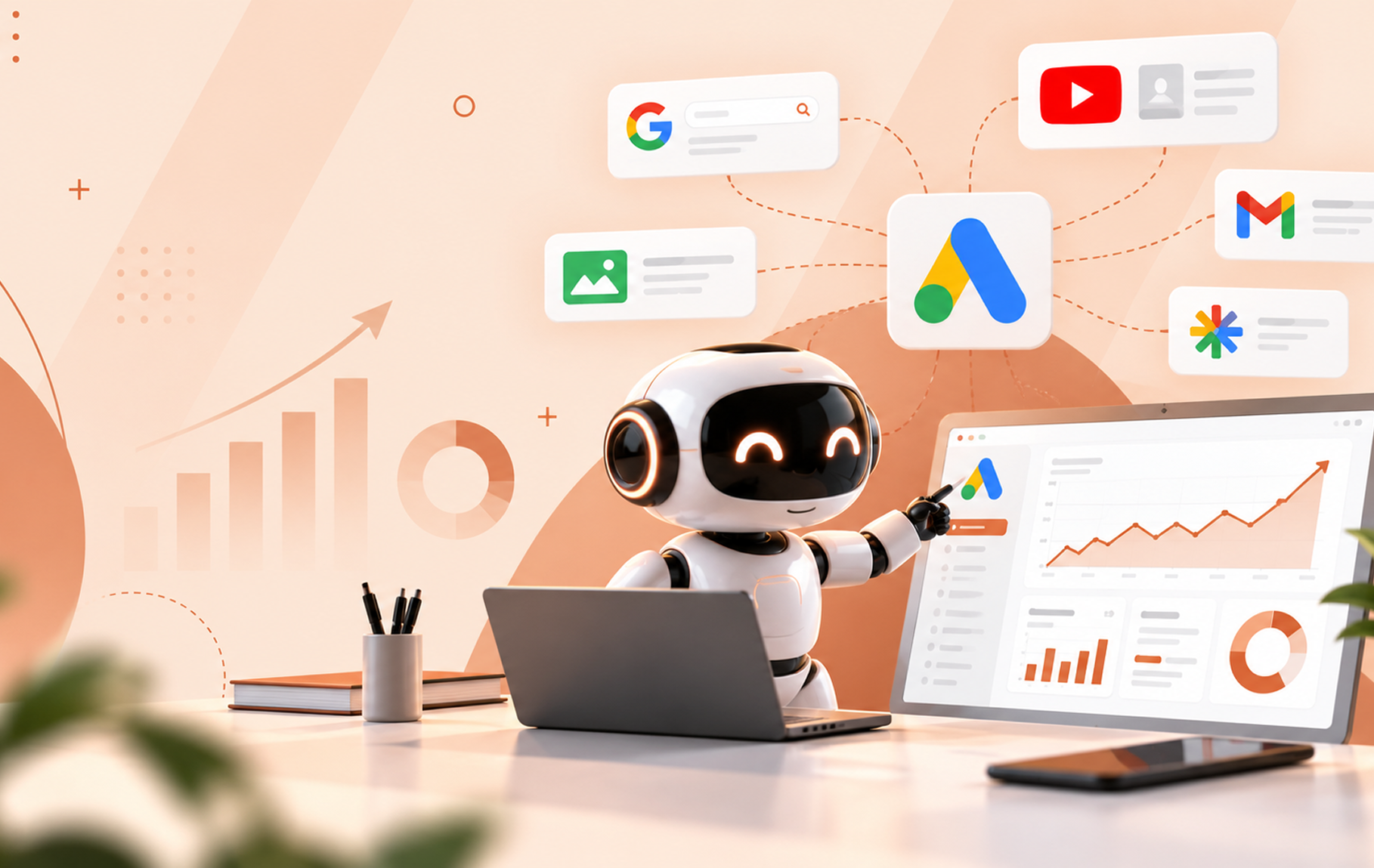
Performance Max is a goal-based campaign type. Google's AI runs it across Search, YouTube, Display, Discover, Gmail and Google Maps, wherever your ads are eligible to appear.
Instead of building a separate campaign for each channel, you give Google your objective, budget, conversion goals, creative assets and audience signals. Its systems then work out how to reach the people most likely to take the action you want.
It's a good fit if you're trying to scale lead generation, online sales or any other conversion you can measure.
Here's what it does for you:
- Automated bidding: adjusts bids in pursuit of your conversion or conversion-value goal.
- Audience discovery: uses audience signals and context to find potential customers.
- Creative optimization: mixes your headlines, descriptions, images and videos into different ad variations.
- Cross-channel delivery: looks for opportunities across all of Google's inventory.
- Conversion optimization: learns from performance data to decide where to show ads next.
You still set the strategy and the business goals. Google handles much of the delivery. And the results you get depend heavily on what you put in.
How AI Is Actually Running Your Campaigns
AI now touches nearly every stage of delivery, from finding people to choosing which creative they see. Here's what that looks like in practice, and what you should do about each part.
1. Bidding and budget
In the old days, PPC managers spent hours adjusting bids by keyword, device, location and time of day. Performance Max uses automated strategies instead, such as Maximize Conversions, Target CPA, Maximize Conversion Value and Target ROAS (where they're available and suitable for your campaign). It weighs the signals it has, estimates how likely and how valuable a conversion is, and bids accordingly.
That saves you a lot of manual work. But the system can only optimize toward what you tell it matters.
Take a B2B campaign that treats every form fill as equally valuable. The AI will happily chase the cheapest enquiries, even if none of them ever turn into a sales conversation.
What to do: Set up conversion actions that actually mean something. Separate your primary conversions from secondary ones, and assign revenue or qualified-lead values wherever you have reliable data.
2. Audience discovery
Audience signals give Performance Max a starting point. They can include your customer lists, website visitors and custom segments. But they're hints, not fences.
A lot of advertisers assume that if they add a specific audience, their ads will only reach those people. That's not how it works. If Google's AI spots a chance to hit your goal elsewhere, it'll go there.
What to do: Share relevant first-party data and use sensible signals. Then judge the quality of the customers you actually win, not just impressions and clicks.
3. Ad creative
Google can combine the headlines, descriptions, images and videos you supply into lots of different ads. Depending on your settings, AI features can also generate or adapt some assets for you. That makes testing messages and formats a lot easier than building every variation yourself.
But automation can't fix a weak message. If your landing page is outdated, your assets all sound the same or your copy ignores what customers worry about, the AI will just spread those problems around more efficiently.
What to do: Give it a varied set of strong assets. Where you can, review any auto-generated content, and make sure every version reflects your brand, your offer and the audience you're after.
4. Placements and channels
Performance Max decides where to show your ads based on where it expects conversions to happen. That can help you reach people at every stage, from first discovery to purchase or enquiry.
It also makes analysis harder. Your overall numbers might look great while some placements are doing most of the work and others are barely contributing.
What to do: Dig into the channel, placement and conversion reports that are available. Don't stop at the headline numbers. Ask whether the campaign is producing outcomes that are valuable to your business.
5. Prediction and learning
Google's AI keeps learning from your campaign and conversion signals, which means conversion tracking is the foundation of everything in 2026. If your events are incomplete, duplicated or set up wrong, the system will optimize toward the wrong thing.
For lead-gen businesses, a form submission is only the first step. What you really want to know is whether that enquiry became a qualified lead, an opportunity or a customer.
What to do: Audit your tracking across Google Ads, GA4 and your tag manager. Where you can, connect your CRM and import qualified-lead or offline conversion data so bidding lines up with real business results.
What Is Google AI Max for Search?
Performance Max isn't the only part of Google Ads being reshaped by AI. AI Max for Search is a separate set of enhancements for Search campaigns. Depending on your settings and eligibility, it offers expanded search-term matching, text customization and Final URL expansion.
In April 2026, Google announced that AI Max was moving out of beta. It also outlined changes to some legacy Search features, including a planned transition for Dynamic Search Ads.
The bigger story is the shift away from relying only on hand-picked keywords and toward understanding the intent behind more complex searches. Someone might type out a detailed business problem instead of a short product keyword. AI-powered matching can catch those searches when a tight keyword list would miss them.
The trade-off is that broader matching and automatic landing-page selection mean you need to pay closer attention. You should know which queries you're reaching, whether the landing pages fit what people want and whether that traffic is worth paying for.
It helps to keep the two straight:
- Performance Max: uses AI to optimize delivery across eligible Google channels.
- AI Max for Search: adds AI-driven matching, creative and landing-page features to Search campaigns.
They work well together, but they aren't the same thing. Choose and configure each one based on your goals, account structure, measurement setup and how much control you want.
AI Is Changing How People Search, Too
It's not only the campaigns that are changing. The way people use search is changing as well.
At Google Marketing Live in May 2026, Google announced new ad experiences for AI Mode, including Conversational Discovery ads and Highlighted Answers. They're built for more conversational searches, where people research a problem, compare options and ask follow-up questions instead of typing a simple commercial keyword.
That means customers may first meet your brand in the middle of a conversation. Clear messaging, useful landing pages and well-defined product or service information matter more than ever.
One warning: turning on Performance Max or AI Max doesn't guarantee your ads will appear in every AI-powered search experience. Eligibility and delivery depend on the specific product, your campaign setup and Google's systems. The practical move is to keep your fundamentals strong and watch which of these formats become available in your account.
Where Performance Max Can Help You
With clear goals and reliable measurement, Performance Max can offer real advantages.
Less manual work. Automated bidding, asset mixing and cross-channel delivery take a lot off your plate, so you can spend more time on strategy, creativity and understanding the business.
New customers. AI-driven matching can find people you wouldn't have thought to target.
Faster creative testing. Your assets get combined and tested automatically, so you learn which messages and formats land without building every combination yourself.
Closer ties to business goals. Smart bidding can optimize toward conversions or conversion value, as long as you've set your objectives and measurement up properly.
Room to grow. If you have solid conversion data, enough budget and strong landing pages, automation can help you scale toward your acquisition targets.
To be clear, these are opportunities, not promises. Your results will depend on competition, budget, conversion volume, business model, creative quality and plenty of other factors.
The Challenges You Can't Ignore
Automation brings risks along with the benefits. Here are the ones to watch.
More conversions don't always mean better leads
You can easily end up with more inquiries from people outside your target market, with little buying intent or without the budget for your service. This matters most for B2B and high-value services, where qualification matters more than volume.
What to do: Track qualified leads, opportunities and customers wherever possible, and use CRM feedback to see whether your ads bring in commercially meaningful results.
Less visibility
The system makes plenty of decisions behind the scenes. Google offers reporting and controls, but you won't have the same direct say over every targeting and placement choice as you would in a tightly structured campaign.
What to do: Look at the search-term insights, asset performance, landing-page destinations and channel reports you can access. Keep a separate testing framework so you can work out what's behind any change in performance.
Bad tracking misleads the algorithm
If your campaign counts duplicate submissions, low-value actions or accidental clicks as wins, the bidding system will chase more of them.
What to do: Audit your tags, conversion definitions, attribution settings and consent-related measurement. Test your forms and call tracking before you raise budgets.
Brand consistency can slip
Automatically generated or combined assets won't always say what you meant as well as carefully written copy would.
What to do: Set messaging guidelines, check asset quality and make sure claims, pricing, offers and service descriptions are accurate.
Budgets still need a human
Automated bidding doesn't replace budget planning. Campaigns struggle when budgets are too tight, goals are unrealistic or several campaigns compete for the same conversions.
What to do: Set practical targets, look at marginal performance and review changes before scaling spend. Don't raise budgets just because impressions or clicks are going up.
Your 2026 Checklist
The best results come from pairing AI automation with human strategy and measurement. Here's a practical way to do it.
-
Check conversion tracking: Make sure Google Ads and GA4 track meaningful actions accurately.
-
Connect your CRM: Use qualified leads and sales data to measure real results.
-
Improve landing pages: Keep pages relevant, fast, mobile-friendly and focused on conversions.
-
Review ad creative: Use varied headlines, images and videos that speak to your audience.
-
Set campaign guardrails: Review audience signals, brand controls and targeting settings.
-
Monitor traffic quality: Check search insights, placements and lead relevance.
-
Track business results: Focus on qualified leads, acquisition costs and revenue, not just clicks.
-
Test before scaling: Make changes based on performance data before increasing budgets.
Performance Max vs. Traditional Search
Neither is automatically better. The right choice depends on your goal, your audience, the data you have and how much control you want.
Plenty of advertisers do well using both. Search campaigns can handle specific commercial intent while Performance Max adds reach and cross-channel opportunities.
Just don't assume that running both means extra results. Look at overlap, conversion attribution and overall account performance before you decide how to split your budget.
Where PPC Automation Is Heading ?
The direction is obvious. AI is taking over more of the operational work: finding audiences, matching ads to intent, generating creative variations and optimizing bids. The AI Max developments and the new AI search ad formats show this goes well beyond Performance Max.
So the marketer's role is changing. The people who do well will be the ones who can:
- Turn business goals into meaningful campaign objectives
- Supply accurate first-party and conversion data
- Create distinctive messaging and useful landing pages
- Judge lead quality, revenue and profitability
- Understand how automated campaigns behave
- Make decisions based on evidence, not assumptions
Automation doesn't remove marketers from the picture. It moves your attention away from repetitive tweaks and toward the strategic decisions that actually move the business.
Final Thoughts: Let AI Optimize, but Stay in the Driver's Seat
Performance Max has changed how advertisers run campaigns, bringing together automated bidding, audience discovery, creative optimization and cross-channel delivery. It can make you more efficient and open up new opportunities. It can't replace the basics.
You still need accurate conversion tracking, relevant landing pages, creative that connects, sensible budgets and a clear idea of what a valuable lead or customer looks like.
The best Google Ads strategy in 2026 isn't to automate everything and walk away. It's to give the AI good inputs, set sensible guardrails and keep asking whether the results are helping your business grow.
AI can optimize how your ads are delivered. It's still up to you to make sure they bring in the right customers, at the right cost, with real business value.
Want to make sure your Google Ads campaigns are delivering real business results? Straight Growth can help you make the most of AI-powered advertising with smarter campaign strategies, better tracking and ongoing optimization. Get in touch with our team to see how we can help.
Frequently Asked Questions
1. What is Google Performance Max in 2026?
It's an AI-powered campaign type that optimizes your ads across eligible Google channels using your goals, budget, creative assets, audience signals and conversion data.
2. How does AI improve Google Ads campaigns?
AI can automate bidding, help find relevant audiences, combine creative assets, expand your reach and optimize delivery toward conversion or conversion-value goals. How well it works depends on your setup and measurement.
3. What's the difference between Performance Max and AI Max for Search?
Performance Max optimizes ads across multiple Google channels. AI Max for Search adds AI-powered targeting, creative and landing-page features to Search campaigns.
4. Is Performance Max good for lead generation?
Yes, as long as your conversion tracking is reliable and you're optimizing toward meaningful business outcomes. Keep an eye on qualified leads and sales results, not just form submissions.
5. Should I stop using traditional Search campaigns?
No. Traditional Search is still useful when you want focused query targeting, specific campaign structures or more direct control. It can work alongside Performance Max when both are managed carefully.
6. What should I monitor in Performance Max?
Cost per qualified lead, conversion quality, customer acquisition cost, revenue, ROAS where relevant, creative performance, landing-page relevance and whatever channel or search-term insights are available.
7. How can I get ready for AI-driven PPC?
Start by auditing your conversion tracking. Then bring in CRM outcomes where possible, improve your landing pages, supply strong creative, set appropriate campaign controls and build a regular review routine.